
Human-Elephant Conflict (HEC) in Bangladesh is a complex and escalating issue, particularly in the Southeastern Region, where both Elephants and Humans share increasingly fragmented habitats. The conflict is most prominent across the two Forest Circles of Chittagong and Rangamati, where approximately 185 Indian wild Elephants (Elephas maximus indicus) struggle for survival amidst human settlements and agricultural expansion.
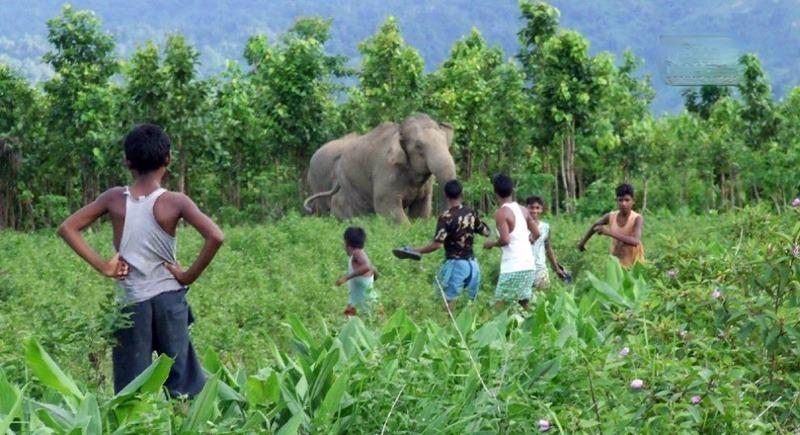
HEC not only threatens the long-term survival of the Elephant Population but also significantly impacts the livelihoods of local communities, causing crop loss, property damage, and occasional human casualties.
This project focused to build community tolerance and political support for Elephant Conservation by reducing the economic impact of HEC through the development and application of effective, low-cost deterrence techniques. Promoting coexistence is critical to safeguarding Bangladesh’s remaining wild Elephant Populations while securing the livelihoods of vulnerable communities.

Project Goals and Objectives
The project aims to mitigate HEC sustainably by focusing on three key objectives:
- Development of Low-Cost, Effective Deterrence Techniques: Implement action-oriented pilot research to create detection and deterrence methods that are locally adaptable and effective for Community-Based Conflict Mitigation (CCM) systems.
- Capacity Building for Stakeholders: Train local communities, CCM managers, and researchers through the Community Training Center (CTC) to ensure the effective application, monitoring, and evaluation of deterrence techniques.
- Advocacy and Stakeholder Coordination: Facilitate communication and partnerships between vulnerable Communities, Government Agencies, and Non-Governmental Organizations to create a collaborative network for sustainable HEC Management.
Communication between Stakeholders
Effective HEC Management requires coordinated action among multiple Stakeholders, including Local Communities, Traditional Authorities, Government Bodies, and NGOs. Previous adopted many CCM systems in Bangladesh have failed to produce lasting results due to poor coordination and fragmented responsibilities in HEC Management.
The project has established a robust stakeholder engagement strategy at local, regional, and national levels, focusing on building bridges between communities most affected by HEC and the authorities responsible for mitigation efforts. Establishing continuous communication channels will ensure that ethical, logistical, and technical supports are timely, appropriate, and responsive to community needs.

Training Programmes for Building Capacity of Local Communities
BISAP has established a Community Training Center (CTC) at Dulahazara Safari Park, serving as a platform to deliver structured training programs at three levels:
Local Community Level:

Five discrete groups, each consisting of five farmers, will receive practical ‘on-the-job’ training on Elephant deterrence techniques during two field days. These households will be continuously monitored throughout the project.
Additionally, five farmer groups have receive three days of intensive training on both Elephant deterrence and sustainable income-generating activities, empowering them to mitigate HEC while enhancing their livelihoods.
Managerial Level (CCM Systems):
Several training sessions have been organized for field managers, focusing on the implementation of systematic Elephant Management Strategies, Field Monitoring Protocols, and Database Management to facilitate evidence-based decision-making.
- Researcher Level:
Researchers from Universities, Research Institutes, and Forest Zones working on HEC have been selected for advanced training on research design, field methodology, GIS-based spatial analysis, quantitative ecological assessments, and social impact evaluation.
This component has ensured a pipeline of skilled professionals dedicated to HEC Mitigation and Conservation Research.
Collaboration & Advocacy for Mainstreaming HEC Management

Advocacy is a cornerstone of this project, aiming to mainstream HEC Management principles into National Development agendas.
Key activities have been adopted organizing multiple sharing, coordination, and policy dialogue sessions involving Government Agencies, NGOs, Community Organizations, and other Stakeholders.
Through these collaborative efforts, the project envisions established a National and Regional Partnership Network that can collectively working towards minimizing HEC under a unified, collaborative framework.
Sustainability
BISAP has built strong synergies through persistent advocacy, particularly by engaging key stakeholders such as forest officials and regional forest authorities.
The CTC remains a pivotal institution offering continuous outreach support, helping local communities better cope with living in Elephant ranges by providing technical advice, early warning systems, and practical mitigation tools.

The training hub has also successfully initiated sustainable income-generating activities for vulnerable households through partnerships with National Organizations, government Bodies, and through active Community Participation.
By embedding HEC Management into broader livelihood initiatives and capacity-building programs, the project ensures that its impacts are long-lasting and that Local Communities remain resilient and proactive in conservation efforts.
Impact of the Implemented Project
During the project period, pilot research studies and extensive training programs were conducted, resulting in notable achievements:
- Reduction in Crop Raiding:
A significant decrease in the intensity and frequency of crop damage has been observed within the targeted zones of Chittagong and Rangamati Forest Circles, thanks to the application of improved CCM techniques and local training delivered through the CTC.
- Enhanced Knowledge and Management:
Increased awareness and practical knowledge regarding Elephant behavior and conflict mitigation among Community Members, Managers, and Researchers were achieved through the distribution of Booklets, Posters, Field days, Theatrical Plays, and Management Workshops.
- Increased Community Tolerance and Political Support:
Strengthened community tolerance towards Elephants and reinforced political commitment to wildlife conservation have been key outcomes, paving the way for long-term coexistence strategies.