
Following the successful completion of the “Empowering Coastal Communities through Women’s Socio-Economic Advancement” initiative, BISAP (Bangladesh Institute of Social Advancement and Participation), with the continued support of the Andheri-Hilfe, Ev.Boon Germany launched of the project in the same 13 villages across 2 unions within 1 Upazilla of the Chittagong District, Bangladesh. This has been designed to build upon and strengthen the foundational work achieved during the project period, with an intensified focus on sustainability, leadership, and socio-economic resilience.
The extension, covering an additional two-year period, responds to the persistent vulnerabilities faced by coastal women in terms of poverty, marginalization, limited economic opportunities, and social exclusion. By addressing these pressing challenges through inclusive, participatory, and transformative interventions, the project envisions creating a gender-just society where women are equipped to lead their families and communities toward economic stability and social equity.
Project Context and Rationale
The coastal regions of Chittagong, like many other marginalized areas of Bangladesh, are characterized by economic hardship, environmental vulnerability, and limited access to resources for women. The prevailing patriarchal norms often hinder women’s full participation in economic and decision-making processes. The project initiated a wave of change by organizing 800 marginalized women into 40 cohesive groups, enhancing their capacity through awareness, training, income-generating support, and social mobilization.
This momentum, placing a stronger emphasis on reinforcing group solidarity, enhancing leadership and communication skills, improving self-reliance, increasing access to productive resources, and strengthening the community’s socio-economic fabric. Through People’s organization (Federation Building) the collective strength of these women, now emboldened through group-based support systems, serves as the driving force behind community transformation and resilience building.
Project Objectives
The specific objectives of the project are aimed at empowering coastal women through:
a) Activating Group Dynamism: Strengthening internal group structures by empowering women leaders to take ownership of the group’s functioning, decision-making, financial record-keeping, and strategic planning—ensuring each group operates independently and sustainably.
b) Developing Human Potential: Providing need-based capacity-building interventions for both group members and emerging leaders. These include life skills, leadership development, critical thinking, conflict resolution, and entrepreneurship training to enhance their ability to act confidently and purposefully.
c) Mobilizing Local Resources: Promoting the optimum use of locally available resources such as manpower, soil, and water through environment-friendly livelihood practices and income-generating activities (IGAs).
d) Small Business & Entrepreneurship Development: Imparted extensive skilled development training among 40 organized groups for undertaking small trade, poultry bird rearing, mate making, candle making, net making, vegetables gardening, dry food processing, agriculture, livestock, fisheries, or other productive enterprises, leading to a tangible increase in household income and food security.
e) Strengthening Social Cohesion: Fostering social coherence by encouraging Federation Building mutual respect, shared responsibilities, and a culture of cooperation among women, breaking down barriers of caste, ethnicity, and economic status.
f) Amplifying Women’s Voices: Supporting women in exercising their agency by raising collective voices in favor of their rights and entitlements, and by encouraging their participation in local governance structures and policy advocacy platforms.
g) Promoting Ecological Sustainability: Providing timber, fuel, and fruit-bearing saplings to women for homestead afforestation initiatives. These activities not only supplement income but also contribute to local ecological restoration and climate resilience.
h) Facilitating Public-Private Resource Linkages: Mobilizing financial, institutional, and technical support from both governmental and non-governmental actors to advance poverty alleviation strategies aligned with community priorities.
i) Advancing Social Mobilization: Creating platforms for women to engage in community dialogue, challenge harmful social norms, and promote inclusive development agendas that center women’s rights and dignity.
j) Boosting Agricultural Productivity: Introducing improved farming methods, diversified cropping, organic farming, and homestead gardening practices that increase food availability and reduce household expenditures.
k) Encouraging Savings Culture: Encouraging disciplined savings among members to create a sustainable internal financial pool for future emergencies, investments, or educational purposes.
l) Reducing Social Isolation: Working to eliminate ignorance, superstition, and isolation by promoting education, awareness, and community engagement among distressed women.
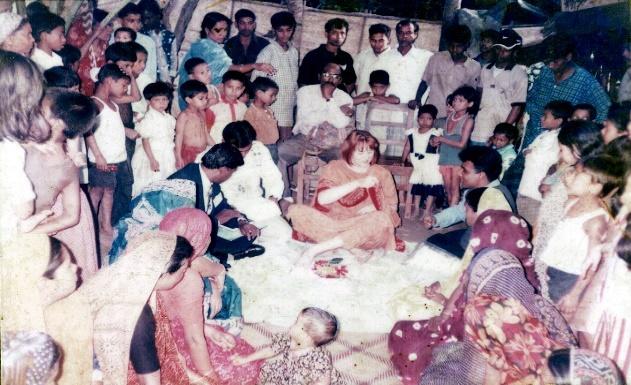
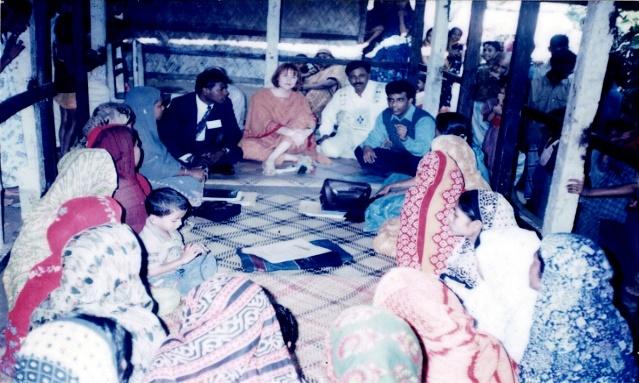
Visiting Honorable President of Andheri-Hilfe Germany M.s Elvira Grenier & Mr Sanker Patrick Costa Coordinator Caritas, Bangladesh is seen discussing with organized group members of BISAP at Sitakunda Project area.
Key Activities and Achievements
The program has continued to yield significant results in line with its goals. BISAP has successfully implemented the following key activities:
1. Baseline Survey and Needs Assessment
A comprehensive baseline family survey was conducted covering 800 women across 40 groups to reassess their economic, social, and cultural status. The data gathered helped in refining the program strategy and ensuring that interventions are tailored to the evolving needs of each community.
2. Social Awareness and Identity Formation
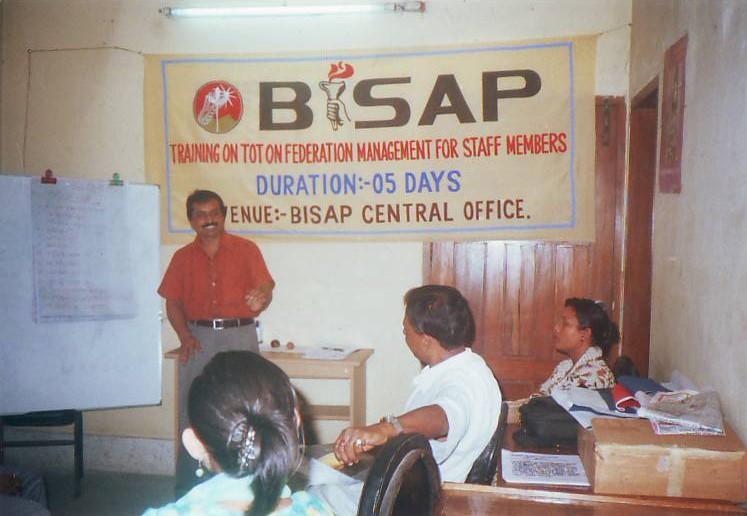
Through community meetings, reflection sessions, and peer exchanges, BISAP facilitated organized group members to enhance their social awareness federation training, skilled development, resource mobilization. Women now demonstrate greater self-awareness and are equipped to analyze and question their socio-economic conditions. This growing awareness is the cornerstone of transformative change.
3. Strengthening Group Mechanisms
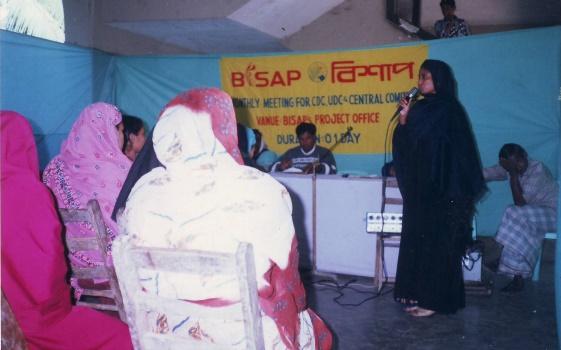
Group meetings are now held on a regular basis with increased participation. Women are participating in federation meeting, UDC & engaged to establishing their due rights in the society, discussing community issues, and developing joint strategies. Group dynamism has led to a strong sense of identity, security, and mutual accountability.
4. Capacity Building and Training Programs
A wide array of trainings has been provided to members and leaders, including:
- Federation Building village level & union level Leadership Development and Women’s Rights
- Legal Literacy and Access to Justice
- Nutrition Education and Balanced Diet Cooking
- Preventive Healthcare and Maternal-Child Health (MCH) Care
- Credit Utilization and Management
- Improved Agricultural Techniques and Climate-Smart Farming
- Homestead Vegetable Gardening
- Business Planning and Marketing Skills

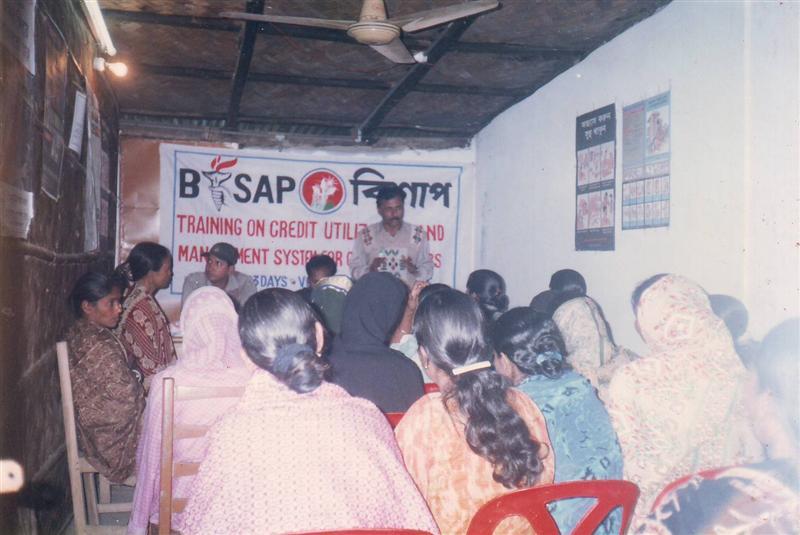
Annual Federation leader meeting workshops and community-wide get-togethers have further contributed to building leadership pipelines and creating a sense of collective pride.
5. Homestead Afforestation and Environmental Awareness
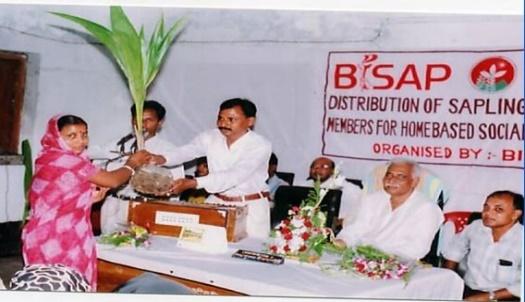
Over 5,000 saplings of timber, fuel, and fruit-bearing plants were distributed among group members, creating home-based green zones while promoting biodiversity and contributing to climate adaptation. The program also integrates environmental education to nurture women’s stewardship of natural resources.
Public Campaigns and Advocacy Events
BISAP facilitated the organization of community action events, dialogues with local authorities, and public awareness campaigns. These activities have enhanced the visibility of women’s groups and their contributions to local development, while also advocating for gender-sensitive policies and services through Federation Committee.
Strengthening Economic and Social Rights
Through empowerment and consistent mobilization, many women have now claimed their legal rights in areas such as land inheritance, access to social protection schemes, and participation in local development committees. Their collective voice is making an impact on how communities and institutions respond to women’s concerns.
Outcomes and Impact
The tangible outcomes of the project underscore its effectiveness and transformational nature:
Federation Building & Organizing Committee in village level & union level are functional.
- Increased average household income among group members
- Strengthened leadership roles assumed by women at the village and union levels
- Greater self-confidence, decision-making capacity, and reduced dependency on male family members
- Emergence of women entrepreneurs leading small-scale businesses
- Notable increase in girls’ school enrollment as a result of women’s awareness and income
- Enhanced environmental consciousness and community-led green initiatives
- Strengthened resilience to external shocks such as economic downturns or natural calamities
- Enhanced recognition of women’s contributions to community development
The supported project by AH Germany “Empowering Coastal Communities” project has not only solidified the gains but also elevated women’s empowerment to new heights. With increased group solidarity, diversified income sources, improved leadership, and social recognition through People’s Organization (Federation Building), the women of Chittagong’s coastal villages are now shaping a more inclusive and sustainable future for themselves and their communities.
BISAP remains committed to expanding these learnings across new geographies while continuing to nurture the seeds of change planted through this partnership with the Andheri-Hilfe, Ev.Boon Germany. The collective journey of these 800 empowered women stands as a testament to what’s possible when communities come together, united by trust, guided by purpose, and driven by the shared dream of freedom from poverty and hunger.