
With generous support from Catholic Relief Services (CRS), USA, BISAP launched the “Socio-Economic Project for the Bangladesh Non-local Refugees” to enhance the dignity, well-being, and future prospects of displaced families residing in Refugee Camps. This transformative initiative targets marginalized urban settlements, offering both tangible infrastructure improvements and vital human development services.
Vision & Purpose
The project aims to break the cycle of poverty and vulnerability among non-local Refugees by enabling self-reliance and social inclusion. Through a mix of institutional development, livelihood support, shelter rehabilitation, Water and Sanitation, Education, and Healthcare, BISAP is helping Refugee Communities build stronger, safer, and more empowered lives.
Core Objectives
- Community Needs Assessment
Conduct baseline surveys to map out local challenges and available resources for strategic planning.
- Group Formation & Community Mobilization
Organize 3,600 individuals (both men and women) into 180 self-help groups over 3 years, encouraging leadership, peer support, and knowledge-sharing.
- Skills & Capacity Development
Provide group members with hands-on training in Leadership, Entrepreneurship, Health and Hygiene, and financial literacy to build skills, change attitudes, and foster empowerment.
- Education for All
- Launch adult literacy programs to boost confidence and civic engagement.
- Offer basic Primary Education for out-of-school and dropout children to unlock their full potential.
- Health & Well-being
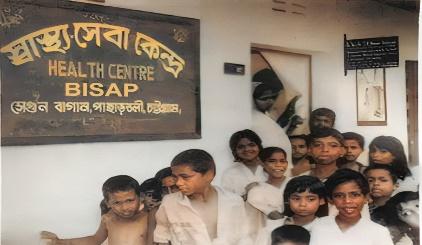
Establish a Health Center to provide essential services, particularly for mothers and children, improving access to preventive and primary care.
- Water, Sanitation & Hygiene (WASH)
Install 150 Tube wells and 1,800 Hygienic Latrines across camps to enhance access to safe water and sanitation.
- Shelter & Camp Improvement
Build affordable housing for the shelterless and upgrade existing camp facilities including roofing and internal partitioning for enhanced safety, privacy, and comfort.
- Monitoring & Evaluation
Ensure consistent supervision, follow-ups, and reporting to maintain quality and impact.
Project Achievements (as of March 31, 1994)
Operational Reach
The initiative now supports 9 Refugee Camps engaging residents in long-term socio-economic transformation.
Community Organization & Savings Mobilization
- 1,275 Camp Residents (men and women) have formed 61 active community groups.
- Each group meets regularly, manages savings collectively, and maintains transparent records.
- Groups hold bank accounts, with members issued individual passbooks.
- BISAP staff ensure dynamic participation and provide ongoing support.
Training & Empowerment
Participatory training programs have enhanced group members’ capacity in:
- Leadership development
- Financial management
- Nutrition and balanced diet cooking
- Health and Hygiene practices
Training uses interactive methods like group discussions, role plays, and case studies. Follow-ups help ensure real-world application of skills.
Adult Education Milestone

- 100 Functional Literacy Centers launched, reaching 2,000 Adult Learners.
- Classes are gender-sensitive, scheduled to suit daily routines (evening for men, afternoon for women).
- All teachers underwent intensive orientation training in Adult Education methodology and psychology.
Education for Children
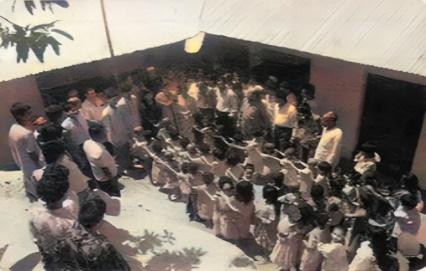
To provide foundational learning to unschooled and dropout children:
- Two semi-permanent schools Shishu Shikkhya Niketan were established in Firozshah and Sarder Bahadur camps (Chattogram).
- Each school has 5 classrooms (1,197 sq. ft.), with 6 trained teachers and 150 enrolled students.
- Curriculum is child-centered and developmentally appropriate.
Health Care Access Expanded
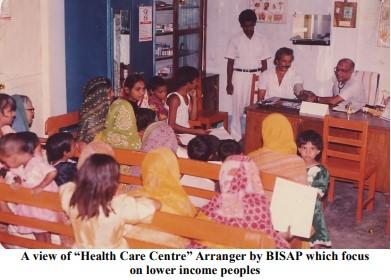
A semi-permanent health center (613 sq. ft.) was built in Segun Bagan Refugee Camp, Chattogram.
- Staffed with doctors and paramedics
- Equipped with essential medicines and medical tools
- Actively delivering healthcare services since March 1994
Shelter Upgrades & Preparations for WASH Installations
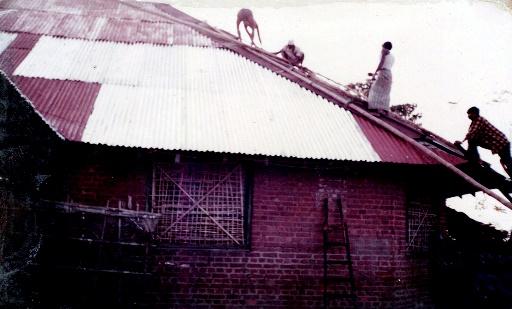
- Camp repairs and internal partitioning have begun to improve safety and privacy of L-93 Non-Local Refugee Camps at Segun Bagan, Pahartali, Chittagong.
- Preliminary work for Tubewell and Latrine installation and low-cost Housing Construction being completed.
Conclusion
The Socio-Economic Project for Bangladesh Non-local Refugees is making tangible progress in improving the lives of displaced communities. Through strong community participation, capacity building, and infrastructural support, BISAP is driving meaningful change. We remain confident that all project goals will be met within the planned timeframe paving the way for a dignified, resilient, and self-sufficient future for the most vulnerable communities.
Conducting baseline surveys is essential for understanding local challenges and resources. Hands-on training in various fields empowers group members and builds valuable skills. Establishing a Health Center ensures access to essential services for mothers and children. Building affordable housing and upgrading facilities improve safety and comfort for the shelterless. How can we ensure the sustainability of these initiatives in the long term? WordAiApi