

Since its inception, Bangladesh Integrated Social Advancement Programme (BISAP) has prioritized community-based resilience-building strategies for climate-vulnerable populations. One of BISAP’s notable interventions addresses the devastating effects of climate change in the flood-prone districts of Satkhira and Gopalganj in Bangladesh, where communities regularly suffer from prolonged inundation, waterlogging, and tidal surges. These conditions critically affect agriculture, employment, food security, and the overall well-being of local people, especially marginalized groups such as women, children, and the landless poor.
The floodplains and coastal regions, primarily inhabited by disadvantaged communities, are characterized by high landlessness, frequent crop failures, and feudal socio-economic structures that compound poverty and restrict access to resources. The seasonal flooding from May/June to November/December creates a cycle of displacement, food scarcity, and malnutrition. During the wet season, rising water levels (up to 3-5 meters) leave crop fields submerged for extended periods, eliminating the possibility of cultivating traditional crops during the kharif season. Even homesteads, which are elevated 1.5 to 2.5 meters above the field level, are often surrounded by water, making access and agriculture difficult.
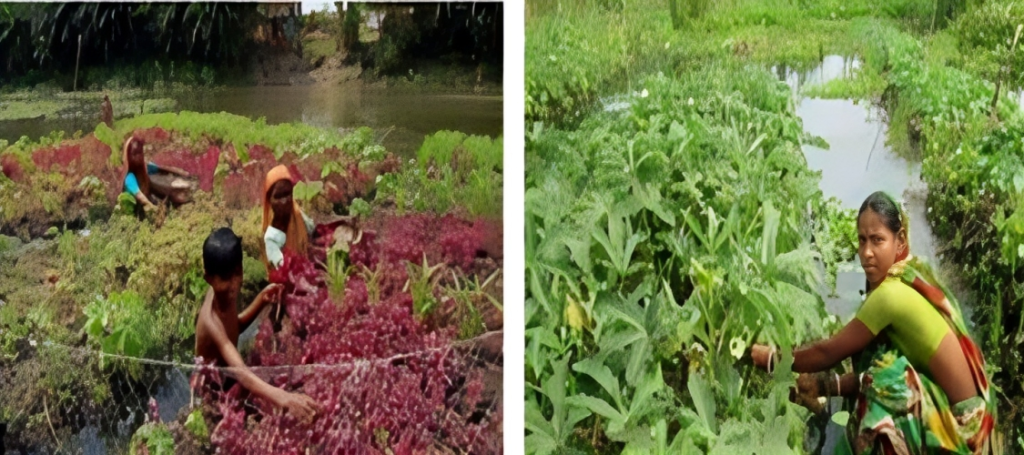
Livelihood Crisis and Nutritional Insecurity
In these conditions, the most pressing challenges include food insecurity, unemployment, and widespread malnutrition, particularly among women and children. The scarcity of vegetables and fruits—critical sources of vitamins and minerals—exacerbates public health issues in already vulnerable communities. Traditional crop cycles are disrupted, and delays in water recession leave fields waterlogged, further extending the period of food and income insecurity.
Innovative Solution: Floating Bed (Baira) Agriculture
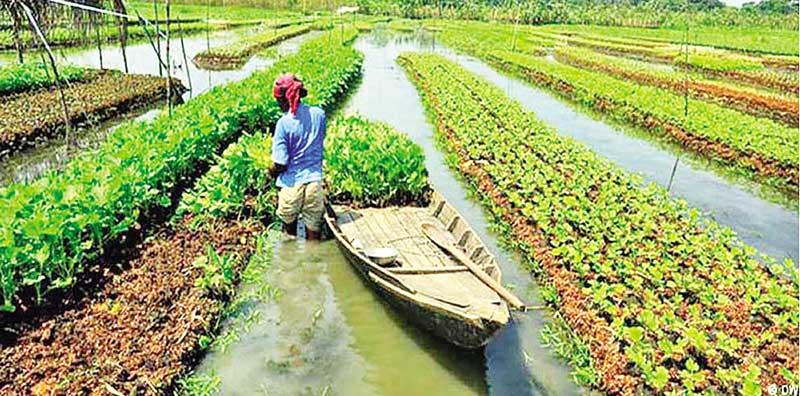
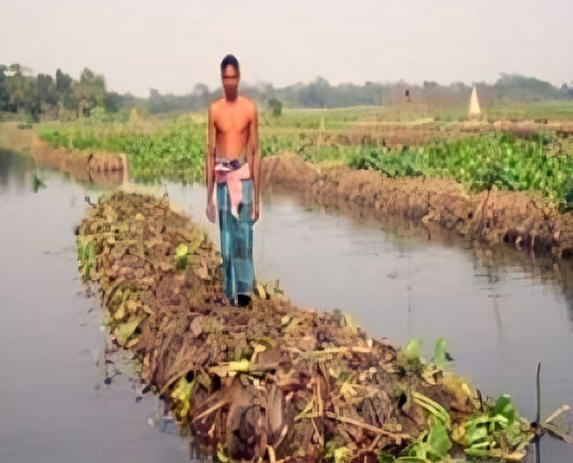
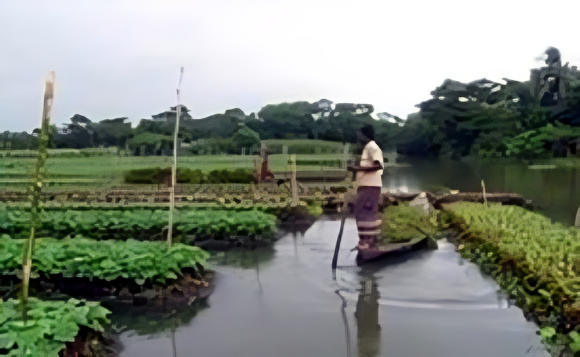
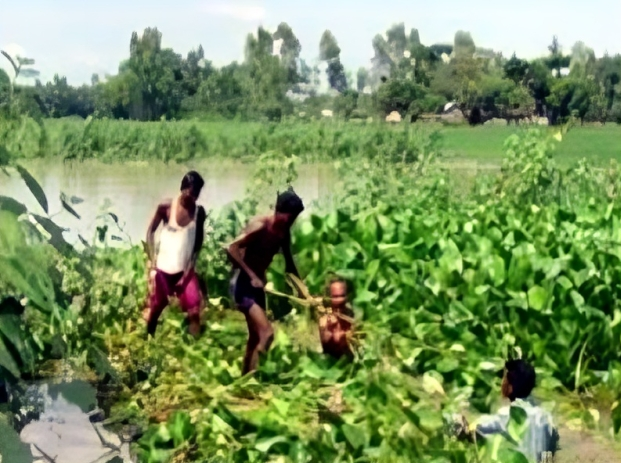
To address these challenges, BISAP introduced and scaled up floating agriculture, also known as Baira cultivation, a traditional but underutilized method of soil-less farming that uses floating beds made from water hyacinth and other aquatic weeds. This climate-adaptive agriculture method allows the cultivation of quick-growing vegetables like Amaranth, Okra, Brinjal, Cucumber, and Kangkong, providing both immediate food supply and marketable produce during the flood season.
Floating bed agriculture serves as an innovative, eco-friendly, and income-generating alternative in waterlogged conditions. The initiative not only enhances food security but also opens new economic opportunities for marginalized households. With targeted community mobilization, capacity-building training, and participatory planning, the project promotes Baira cultivation as a sustainable, scalable solution that improves resilience to climate change while strengthening local food systems.
Key Project Activities
The project undertook a comprehensive set of activities to ensure inclusive participation, effective knowledge transfer, and lasting community ownership:
- Project Site Survey – Identification and assessment of vulnerable communities and available water bodies.
- Baseline Data Collection & Inception Report – Gathering demographic, climatic, and socio-economic data to design an informed implementation strategy.
- Inception Workshop – Engagement of stakeholders and local authorities to align project goals.
- Formation of Climate Change Resilience Committees (CCRC) – Local community groups for planning, implementation, and monitoring.
- Regular Meetings with CCRC – To ensure continuous feedback and participatory governance.
- Village-Level Awareness Meetings – Mobilizing community support and increasing awareness of climate change impacts.
- Production of IEC/BCC Materials – Developing Leaflets, Posters, and Guides on Floating Agriculture Techniques.
- Climate Change Adaptation Fair – Showcasing local innovations and success stories.
- Staff Capacity Building Training – Equipping project staff with technical and community mobilization skills.
- Farmer Training Programs – Hands-on training in Floating Bed Construction, Crop Selection, and anagement.
- Exposure Visits – Facilitating peer learning through field visits to successful project sites.
- Promotion of Flood-Resilient Cropping Patterns and Small Enterprises (SMEs) – Introducing crop diversification and small agri-business models.
- Participatory Monitoring and Evaluation – Continuous assessment with community involvement.
- Upazilla-Level Workshops – Evaluating outcomes, sharing learning, and planning for scale-up.
Project Goal & Outcomes
Overall Goal:
To develop and institutionalize a sustainable, community-based Floating Bed Gardening System (Baira cultivation) as an alternative climate-resilient livelihood strategy for the elimination of extreme poverty and food insecurity in Floodplain, Haor, and Coastal Regions of Bangladesh.
Wider Impact and Alignment with National Goals
This initiative supports the Government of Bangladesh’s development priorities, including:
- SDG 1: Ending poverty in all its forms,
- SDG 2: Achieving food security and improved nutrition,
- SDG 3: Ensuring healthy lives for all,
- SDG 5: Empowering women and girls, and
- SDG 13: Combating climate change and its impacts.
The intervention has demonstrated that with the right support systems, even the most marginalized communities in ecologically fragile areas can become self-reliant, productive, and resilient to the worsening impacts of climate change.
By fostering local innovation, encouraging participation, and integrating indigenous wisdom with new technologies, BISAP’s Floating Agriculture Initiative has laid a solid foundation for sustainable development in some of Bangladesh’s most vulnerable regions Satkhira & Gopalganj Districts.