To promote sustainable employment and enhance resilience during crises, BISAP is delivering comprehensive livelihood and employment-generating skill development training for the most vulnerable, unemployed, and marginalized women in the Urban Settlements & Refugee Camps over populated area of the City. This initiative not only equips participants with practical skills but also nurtures entrepreneurship, opening pathways to self-reliance and financial independence.
Objectives and Impact-Oriented Approach
The primary objective is to build long-term income security and enable women to participate meaningfully in the local economy. By focusing on both employment and entrepreneurship, BISAP ensures that women are not just job-ready but also empowered to launch their own small businesses or engage in productive sectors with confidence.
Recognizing the importance of community ownership, BISAP has embedded the training within the local context to maximize participation, local relevance, and sustainability. Women are trained in skills that directly match market demand and community needs, enabling them to secure stable, dignified employment or operate home-based or group enterprises.
Development of Practical Skill-Based Modules
To ensure structured, high-quality Training Delivery, BISAP has developed five Specialized Training Modules, designed by sectoral experts through a competitive and transparent process (Quotation, CS, and Work Order). These modules are actively used to guide training and related community awareness sessions.
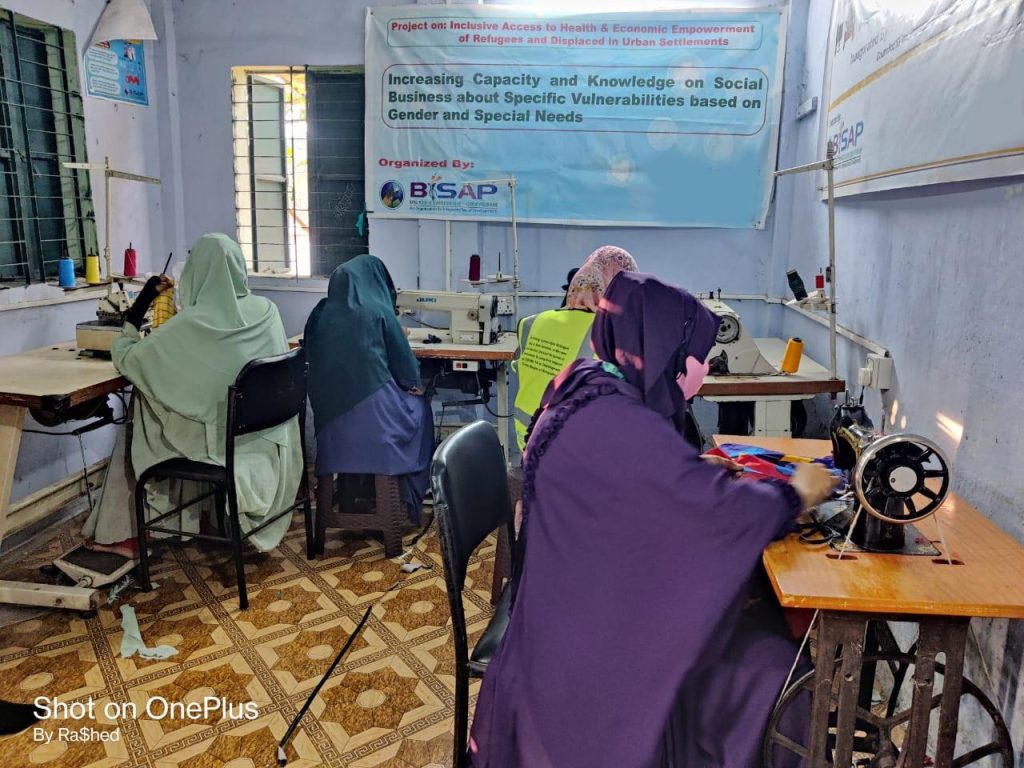
The developed modules are:
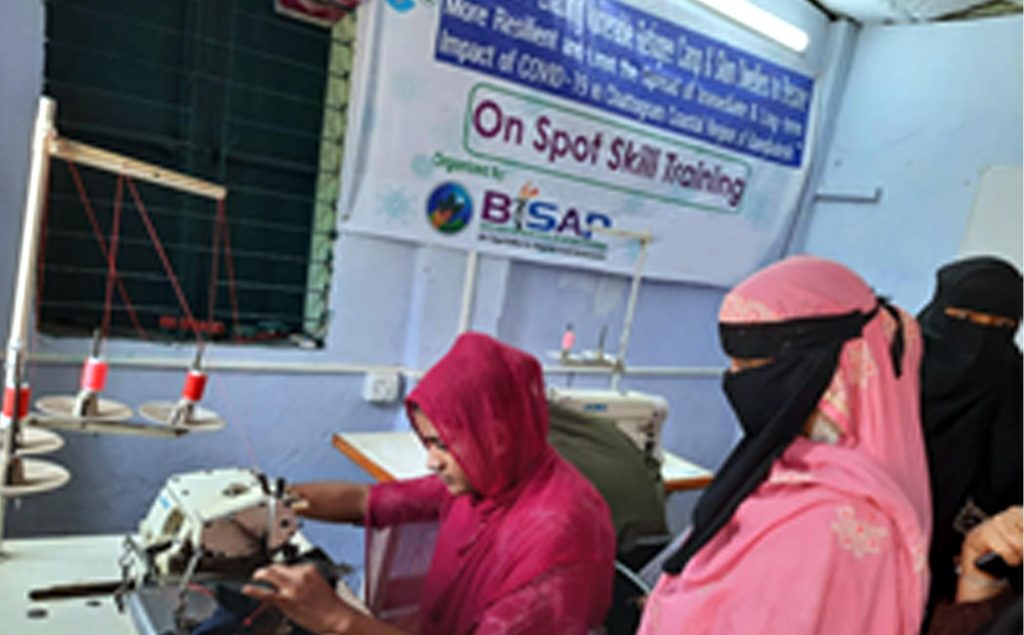
- Sewing Machine Operation – equipping women to start tailoring businesses or gain employment in the garment sector.
- Screen Printing & Roller Printing – introducing creative design skills with local and commercial demand.
- Embroidery and Jute Craft – promoting artisan-based income generation using locally available materials.
- Environmental Sanitation, Hygiene, and Health Education – integrating essential life skills for community health leadership.
- Machine Operation Training – focusing on industrial skills to enhance employability in local manufacturing units.
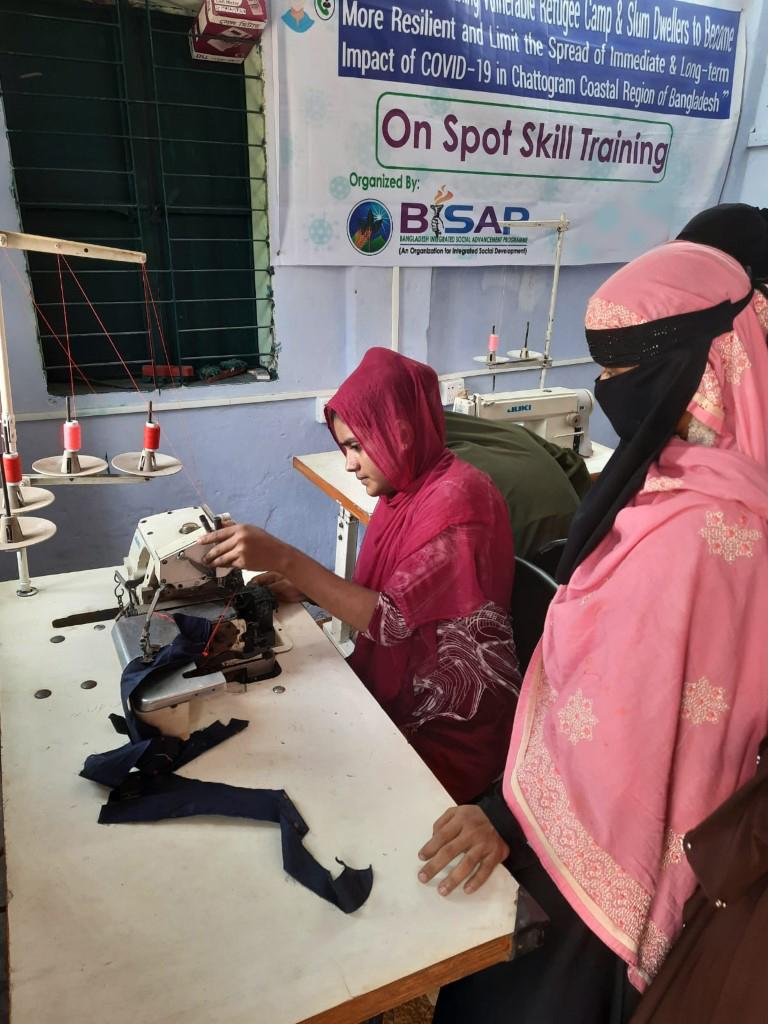
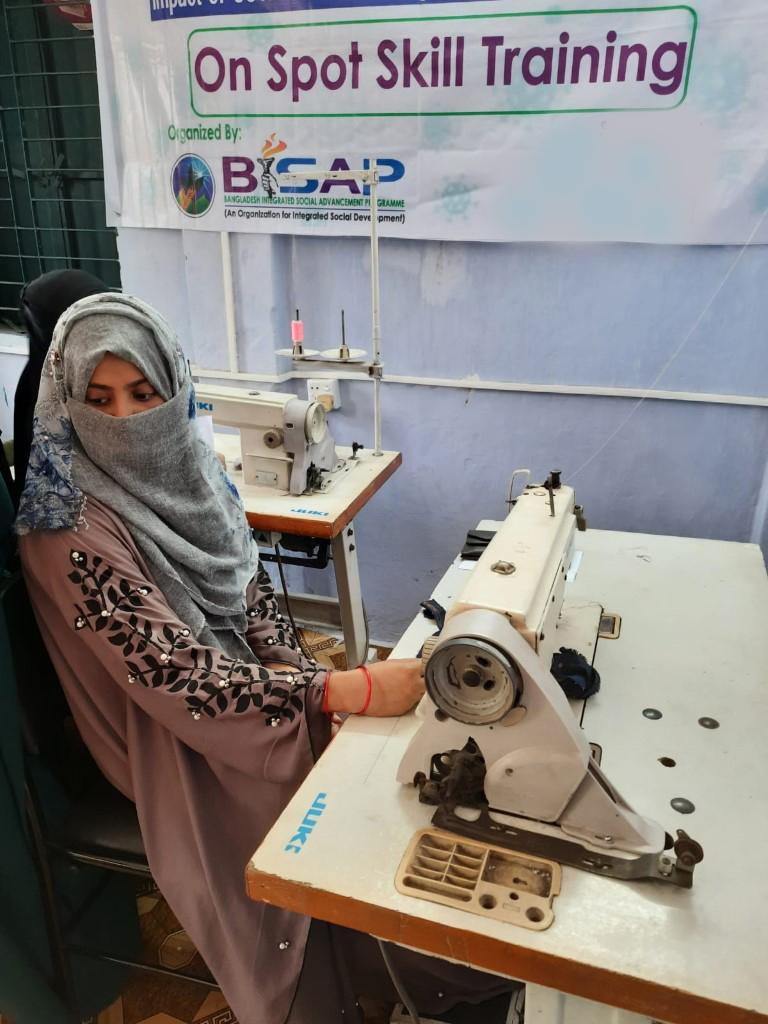
Certification and Recognition of Achievements:
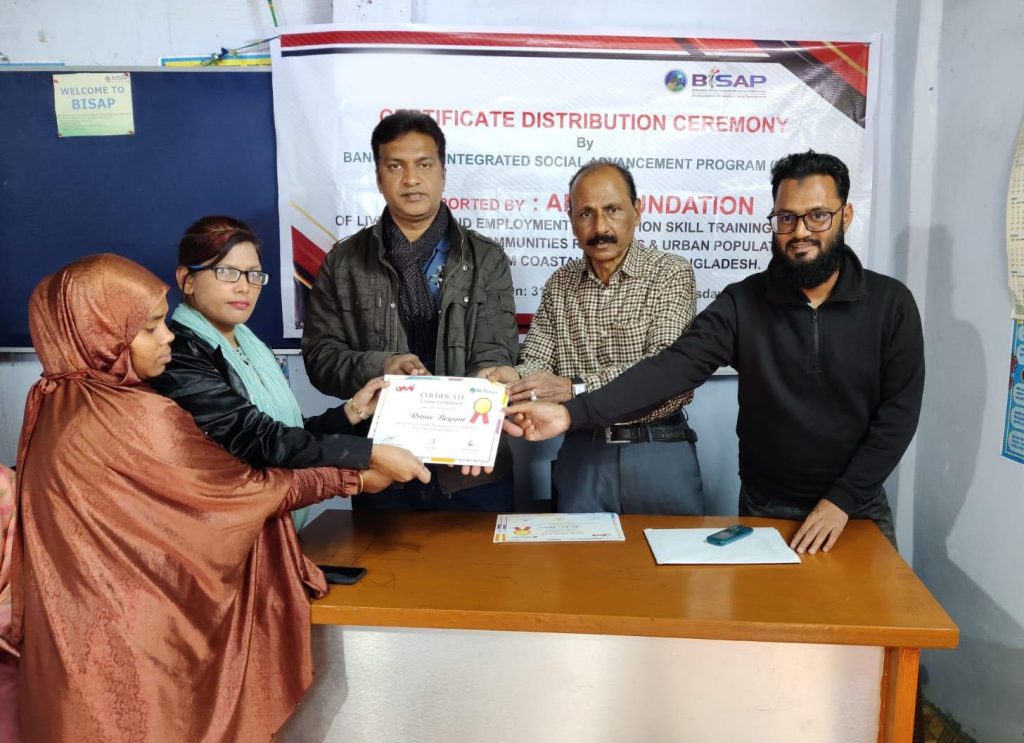
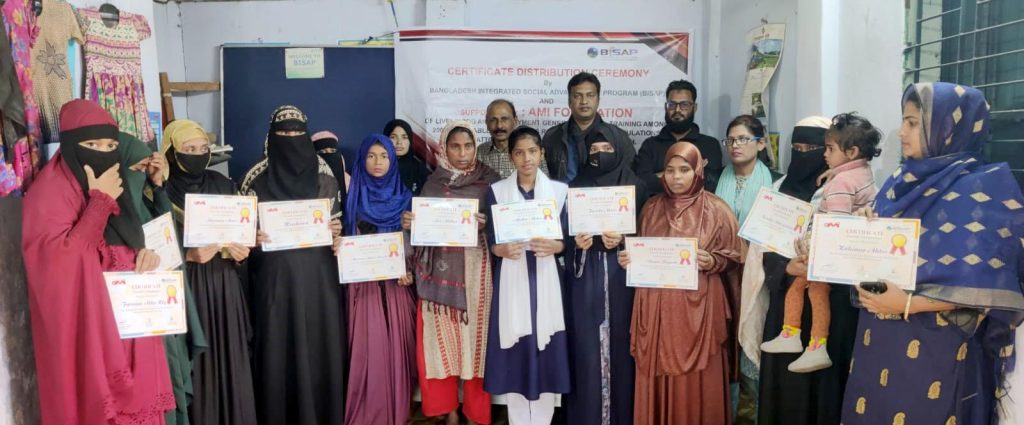
Upon successful completion, 250 trainees underwent final evaluations and were awarded certificates in Machine Operation and Sewing, acknowledging their newly acquired competencies. The Certificate Distribution Ceremony was held with great enthusiasm, attended by trainers, BISAP officials, community leaders, guardians, teachers, and religious figures, reinforcing the social value of women’s skills and motivating participants to pursue productive livelihoods.
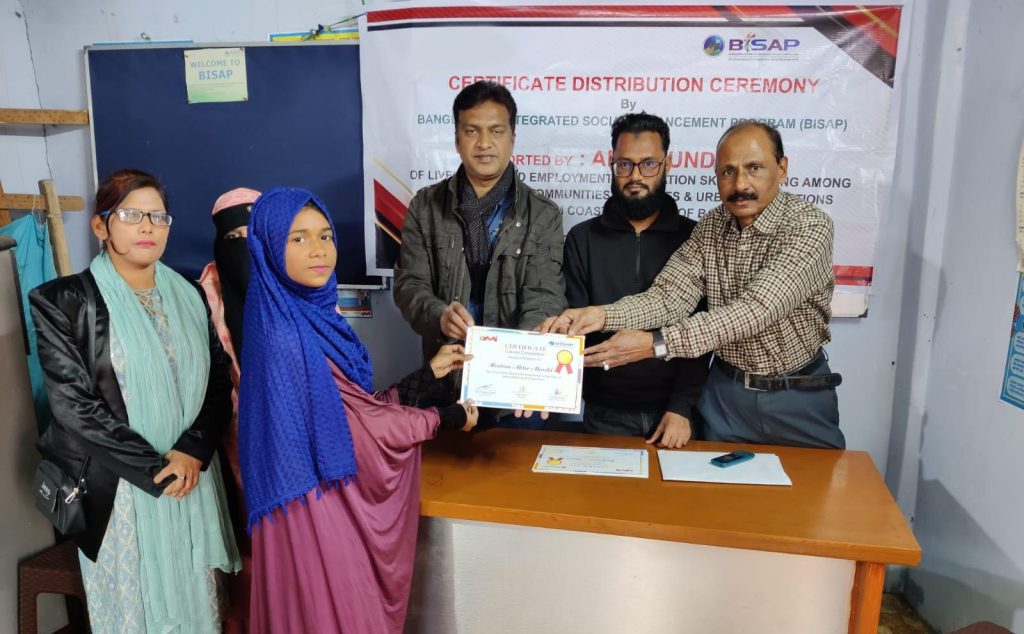
These certificates are not just acknowledgments they are gateways to employment, business partnerships, and social recognition, uplifting women’s status in their families and communities.